Why is poker still the game of choice for over 100 million people worldwide? In an age of video games, crypto trading and TikTok short attention spans, you might think that a centuries-old card game would start to feel a little dusty. But it's not — poker's still going strong. And, honestly, it makes sense. There's just something about it. The combination of skill, psychology, risk and, yes, a little bit of luck scratches a mental itch that most other games simply don't.
Whether you're bluffing your way through a tense hand at a home game with friends, competing in online tournaments, or watching the professionals on TV, poker has a way of pulling people in. It's not just about the cards you're dealt — it's about how you play them. And that challenge? It never gets old.
In this guide, we're going to take you on a journey through the world of poker. First, we'll explore the origins of poker, from the old-school saloons to its evolution into the global game it is today. Then we’ll move on to the practical side of things: how to play well. We'll cover everything from understanding the basics and sharpening your strategy to spotting tells and making moves like a seasoned pro.
Whether you're brand new to poker or you’ve been playing for a while, you'll find something useful in here. Let's get started.
Curious about Poker but not quite ready to play for real money? Good call. Below you’ll find free demo versions from top game providers—no signup, no deposit, just a great way to get the feel of the wheel. Whether you're testing strategies or just getting comfortable with the layout, these demos are a stress-free way to learn the ropes.





Poker didn’t just appear out of nowhere — it has a long and rich history. Its roots go all the way back to the 1500s. First there was a Persian game called As Nas, and later a European game called Primero, which was kind of like poker’s great-great-grandparent. This evolved into "poque" in France, which was brought to the U.S. by French settlers.
By the 1800s, poker was everywhere on the Mississippi riverboats. Picture gamblers in wide-brimmed hats, playing hands of poker over whisky while floating downriver and trying to out-bluff each other. It was rough, gritty and utterly addictive.
Fast forward a bit, and poker really started hitting milestones:
Poker has also had a huge impact beyond casinos and home games. It has appeared in films such as Rounders and Casino Royale, featured regularly on ESPN thanks to the WSOP broadcasts, and even advanced the field of AI. Do you remember Libratus and Pluribus? These were poker-playing bots developed by researchers that could compete with, and even outperform, some of the best human professionals. This wasn't just a cool party trick, it was a legitimate breakthrough in game theory and AI research.
Poker is more than just a casino card game. It's a part of culture and history, and it's constantly evolving. And the cool part? It's still very much alive and kicking.
All right, let's break it down: what is poker, really?
At its core, poker is a game about making the best five-card hand — or convincing everyone that you have the best hand and getting them to fold. That’s the beauty of it. You can win by either actually holding a strong hand or by outbluffing your opponents. Sometimes you’re playing the cards, but often, you’re playing the people. It's like a combination of chess and psychology, but with chips.
Most poker games are played with a standard 52-card deck – no jokers, just the usual suits: hearts, diamonds, clubs and spades. Instead of using real cash on the table, most games use poker chips to represent money. You’ve probably seen the classic white, red, green and black chips. Each colour usually stands for a different value, such as $1, $5, $25 and $100, but this can vary depending on the game or casino.
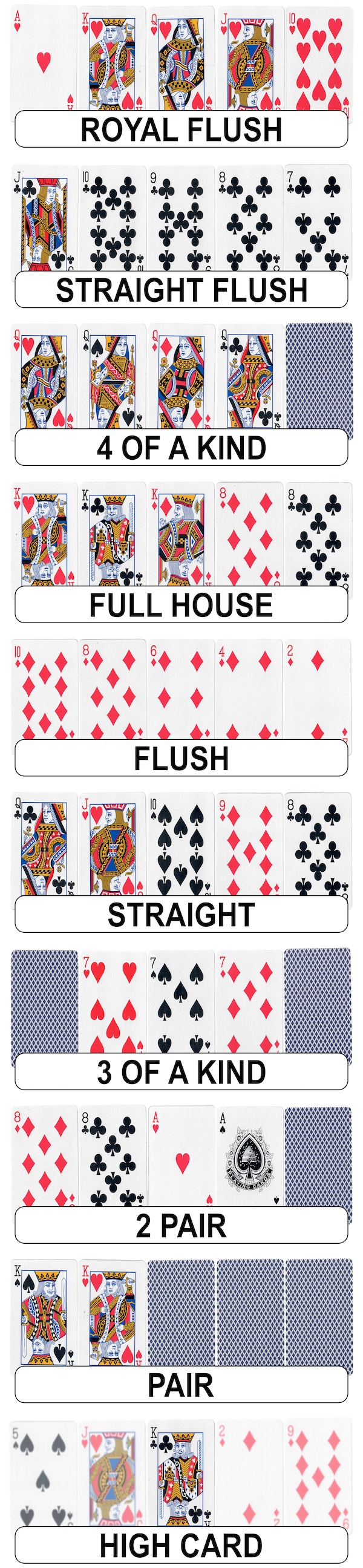
Now, no matter what variant of poker you’re playing — Texas Hold'em, Omaha or Seven Card Stud — they all share one universal rule: Hand rankings. Knowing these is non-negotiable. They determine how every hand is judged, so if you don't know what beats what, you're going to struggle.
Here’s the basic hand-ranking ladder, from strongest to weakest:
| Hand | Description | Example |
|---|---|---|
| Royal Flush | A, K, Q, J, 10 of the same suit | A♦ K♦ Q♦ J♦ 10♦ |
| Straight Flush | Five cards in a row, same suit | 9♠ 8♠ 7♠ 6♠ 5♠ |
| Four of a Kind | Four cards of the same rank | 4♣ 4♦ 4♥ 4♠ X |
| Full House | Three of a kind + a pair | 10♥ 10♣ 10♦ 9♣ 9♠ |
| Flush | Five cards of the same suit, any order | Q♠ 9♠ 7♠ 5♠ 2♠ |
| Straight | Five cards in a row, mixed suits | 10♥ 9♣ 8♦ 7♣ 6♠ |
| Three of a Kind | Three cards of the same rank | 7♠ 7♦ 7♣ X X |
| Two Pair | Two pairs (pretty self-explanatory) | Q♣ Q♥ 6♠ 6♦ X |
| One Pair | Just one pair | J♠ J♣ X X X |
| High Card | None of the above? Highest card wins | - |
Once you’ve mastered that, you’re ready to start thinking like a poker player. Whether you’re in a showdown or trying to read the room, it all starts with those five-card hands.
Okay, so you know the goal and you know what beats what. Now let's talk about how a hand of poker actually plays out. Once you sit down at the table, this is how the magic (and chaos) happens.
Every hand starts with something called 'blinds' (and sometimes 'antes'). These are forced bets that ensure there is money in the pot from the very beginning – otherwise everyone would just sit around folding until they got pocket aces.
In Texas Hold'em, for example, there are:
These players put in chips before the cards are even dealt. Sometimes, in tournaments or home games, you’ll also see antes, where everyone at the table puts in a small amount of chips every hand.
Then there’s the dealer button – a small disc that moves clockwise with each hand. It marks who’s 'dealing', and more importantly, helps determine who acts when (we'll get to that shortly).
Poker hands take place over a series of betting rounds, during which players can check, bet, raise or fold depending on their cards — or what they are pretending to hold.
Here’s how it works in Texas Hold'em, the most popular variant by far:
However, you don't have to make it to the showdown. Most hands end well before that – someone bets big, everyone else folds, and the hand is over.
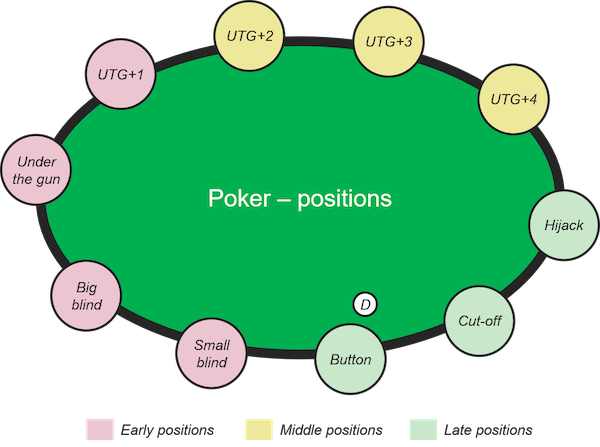
Here’s something that newcomers often overlook: Where you sit at the table is extremely important. In poker, information is power, and the later you act in a betting round, the more information you have before making your decision.
Many seasoned players base their entire strategy on position, playing tight at the start and loosening up as they move closer to the button.
If nobody folds after the river card is revealed, we go to a showdown. Everyone remaining in the game reveals their cards and the player with the best hand takes the pot. Simple, right?
Well, sometimes it gets a little messy. If two or more players have the same winning hand, the pot is split evenly between them. You'll hear this referred to as a 'chop'. Of course, half a pot is better than nothing, especially if you were just trying to survive and got lucky on the river.
So that’s the engine under the hood. From the blinds and position to the betting rounds and the final showdown, this structure makes poker possible. It might seem complicated at first, but once you've played a few hands, it will all make sense. And once it clicks? That's when the real fun begins!
Poker isn't just one game — it's a whole family of games. If you’ve only ever played Texas Hold'em, well done, you’ve played the most popular version, but you’ve barely scratched the surface.
Here’s a breakdown of the major poker families and what makes each one tick:
These are the most familiar to most players, especially if you have watched poker on TV.
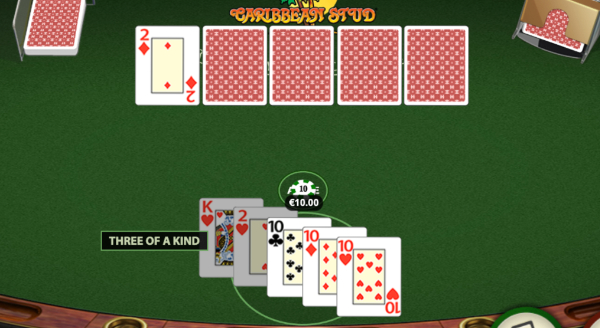
This is traditional poker, probably played by cowboys and grandpas in the past.
These are probably the first games you learnt as a child or at casual home games.
Now we're getting into the fun/weird zone! These games are for players who really want to test their all-round skills.
Poker isn't one-size-fits-all. Each variation has its own rhythm, strategies and die-hard fans. Once you’ve mastered the basics, it’s definitely worth branching out and trying a few of these, because the best way to improve your Hold'em game is often to learn something completely different.
| Family | Examples | Distinguishing rule | Typical player count | Notes |
|---|---|---|---|---|
| Community-card | Texas Hold’em, Omaha Hi/Hi-Lo | Shared board cards | 2–10 | Most televised |
| Stud | 5-Card Stud, 7-Card Stud | Up- & down-cards; no discard | 2–8 | Fixed-limit roots |
| Draw | 5-Card Draw, 2-7 Triple-Draw | Card exchange rounds | 2–6 | Home-game classic |
| Mixed / Novelty | HORSE, Pineapple, Badugi | Rotating rules | 6–8 | Specialist edge |
 🇺🇸
🇺🇸Deposit $50+ and get 3 Spins on Bonuz Mania™ game to win extra prizes: Mega or Minor Jackpot, Piggyz Cash & Break up to $50,000, Deposit Multiplier up to 100x, or Cashback up to 50%! Every time you play Bonuz Mania Slot you will win at least one prize.
Every week in 2025, a mouth-watering $5,000 and 5,000 free spins prize pool is up for grabs, split between the top 150 players.
$10,000 is up for grabs every week! Simply play your favorite BitStarz table games and shoot up to the top of the real-time leaderboard. Each week a fresh new tournament launches and if you’re amongst the top 40 you will take home one of the prizes. What about wagering requirements? None. Zilch.
 🇺🇸
🇺🇸 🇺🇸
🇺🇸All right, it's time to delve into the numbers. But don't worry — we won't be using any complicated equations. Poker is a numbers game at heart, but you don’t need to be a maths genius to grasp the basics. Once you understand some simple odds and concepts, you’ll make much better decisions at the table and probably stop donating chips with bad draws and hopeful calls.
Let's start by looking at how often certain hands actually come up. Many newer players greatly overestimate the likelihood of hitting something like a flush or full house. Spoiler: It’s not that common.
Here’s a quick look at how often these hands occur (based on five-card hands dealt from a full deck):
| Hand | Odds | Probability |
|---|---|---|
| Royal Flush | 1 in 649,740 | 0.00015% |
| Straight Flush | 1 in 72,193 | 0.00139% |
| Four of a Kind | 1 in 4,165 | 0.024% |
| Full House | 1 in 694 | 0.144% |
| Flush | 1 in 509 | 0.197% |
| Straight | 1 in 255 | 0.392% |
| Three of a Kind | 1 in 47 | 2.11% |
| Two Pair | 1 in 21 | 4.75% |
| One Pair | 1 in 2.4 | 42.3% |
| High Card | - | 50.1% |
So, if you're chasing that flush every hand, just know that it occurs in less than 1 in 500 deals, so it's not exactly reliable.
Let's talk outs. Outs are the cards left in the deck that can improve your hand. If you have four to a flush, there are nine cards left that can complete it (since there are thirteen cards per suit and you have seen four of them).
To estimate your chance of completing your hand, use the “Rule of 2 and 4”:
So, for example, if you have nine outs after the flop, the chance of hitting your draw by the river is ~36%. This is close enough to make good decisions without needing a calculator.
This is where the game gets interesting. These concepts help you decide whether to call.
Knowing when these odds are in your favour is what enables solid players to make smart moves while others are just guessing.
If you’re competing in tournaments, survival is only part of the equation — you also need to understand how the money flows.
Adapting your play based on the payout model? That’s next-level tournament strategy right there.
And finally, for the casino crowd, video poker. It's a combination of 5-Card Stud and a slot machine, but with better odds if you understand the paytable.
Different machines have different payout tables. For example:
Tip: Learn the basic strategy for the version you're playing — it massively affects your return.
Poker isn't just about instinct and positive energy — it's a game of maths, risk and long-term thinking. The better you understand the odds and how to use them to your advantage, the more often you'll make profitable decisions. That's how winning players stay ahead.
OK, so you know how the game works and you have a good understanding of the odds. Now it’s time to talk strategy — and this is where poker gets seriously fun (and seriously deep). These are the core pillars on which every solid player builds their game. Master these and you'll already be ahead of the many players who click "call" just because they "felt good about it".
Let's start with the absolute basics: which hands should you play? Not every hand is worth seeing a flop with – some hands just look good but are traps (hello, King-Jack offsuit).
Smart players use starting-hand charts that show which hands are playable depending on your position at the table. Generally:
The earlier you act, the stronger your hand needs to be. The later you act, the more flexibility you have to play creatively.
Position in poker is everything. Acting after your opponents means you have more information before you have to make a decision. You get to see what they do before you act, and that gives you a huge advantage.
Combine that with initiative — being the one who made the last aggressive move — and you’re in the driving seat. Often, people will check to the aggressor, giving you control of the hand, even if you haven't hit the board.
Play more hands in position and don't be afraid to take the initiative with a raise. This gives you more options.
When you place a bet, you're doing more than just putting chips in the pot — you're also sending a message. The size of your bet tells a story.
A good bet isn't just about pot size; it's about why you're betting. Knowing when a smaller or larger bet makes more sense is a huge part of improving.
Reading people is half the game. In live poker, this could mean spotting:
Online, of course, there's no eye contact or body language. But there are timing tells:
It's not foolproof, but once you familiarise yourself with players' habits, you'll start to notice patterns. And that gives you an edge.
This is where we delve into the theoretical side of things. There are two broad schools of thought:
The best players know both. Build your default game around GTO and then tweak it when you spot a leak.
Poker involves variance — it's a game of skill, but also of short-term luck. Even the best players experience downswings. That’s why bankroll management matters so much.
Some professionals use the Kelly Criterion to mathematically size their bets or stakes based on their edge and risk tolerance.
Don't forget about risk of ruin either — if you're constantly putting too much of your bankroll on the line, you could run out of money, even if you're a winning player. That’s just maths.
This is what it means to play poker well. It's not just about getting lucky — it's about playing smarter hands in better positions with the right plan, the right reads and keeping your cool when things go wrong. Master these fundamentals, and poker will suddenly stop feeling like gambling and start feeling like a game you can actually beat.
You're ready to play poker, but you’ve got options: live casino, online, or even video poker at the bar or on your phone. Each one has a completely different atmosphere, pace, and level of skill required. Let's break it down so you know what to expect from each one.
If you enjoy reading people, chatting between hands and playing the long game, live poker might be for you. If you're looking for volume, tools and raw efficiency, online poker is the way to go. And if you just want to relax, switch off, and chase flushes without being judged for your bets, video poker is the answer.
Each format has its own flavour, and hey, no rule says you can't play all three!
| Aspect | Live-Casino | Online Poker | Video Poker |
|---|---|---|---|
| Pace | 25-30 hands/hour | 60-200+ hands/hour, multi-table | Constant |
| Edge | Reads & physical tells | HUDs, large sample sizes | Fixed paytable |
| Rake/Fees | Time charges, % rake | Lower rake, bonuses | House hold via RTP |
| Tools | Chip tricks, table talk | Tracking software, solvers | Strategy charts |
| Legalities | ID checks on site | Geo-fenced licensing | Slot-machine regs |
All right, it’s time to take a closer look at the king of poker variants: No-Limit Texas Hold’em. If you’ve watched poker on TV, tuned in to a high-stakes final table or played a home game with friends, chances are it was Texas Hold'em. It's the game that everyone knows... and thinks they know. Let's break everything down, from the rules to the strategy, and see what sets casual players apart from the experts.
Let’s run through a full hand so you can see how it works:
That’s it! It seems simple, but the real depth comes from all the little decisions in between.
Let's talk about starting hands, because if you play rubbish hands like Queen-Nine offsuit under the gun, you might as well be lighting money on fire.
Here’s the general idea, based on position:
The rule of thumb? Play tight early and loose late. The later you act, the more information you have, so you can afford to take more risks.
Let's take a look at a simple hand and see the equity behind the decisions.
Q♣ 9♦ 4♠
You have top pair with a strong kicker. The player in middle position bets, you call and the big blind folds.
6♠
They check. You bet half the pot.
J♠
They shove. You pause...
Now, let's check the equity of your AQ against common ranges. If they're shoving with overpairs (KK+), QJ or missed flush draws, your equity could still be 40–60%, depending on how wide their range is. If they’re super tight, though? It might be time to fold. If they’re splashy? You might be ahead more often than not.
Here’s a simplified position-based starting hand chart for Texas Hold’em. It shows which hands are generally recommended from different table positions, which is especially helpful when you're starting to refine your pre-flop strategy.
| Hand Type | Early Position | Middle Position | Late Position | Small Blind | Big Blind |
|---|---|---|---|---|---|
| AA–TT | Yes | Yes | Yes | Yes | Call/Raise |
| AKs, AQs | Yes | Yes | Yes | Yes | Call/Raise |
| AQo, AJs | No | Yes | Yes | Yes | Call |
| KQs, QJs | No | Maybe | Yes | Maybe | Maybe |
| 99–77 | Maybe | Yes | Yes | Maybe | Call |
| ATs, KJs | No | Maybe | Yes | Maybe | Call |
| 66–22 | No | No | Maybe | Maybe | Call |
| AJo–A9o | No | Maybe | Yes | Maybe | Fold |
| T9s, 98s | No | Maybe | Yes | Maybe | Fold |
| Suited gappers | No | No | Yes | Rare | Fold |
The cards themselves don't change, but the way you play them certainly does. Here are the key differences:
The biggest adjustment? Stack sizes. In cash games, you’re usually 100 base bets deep. In tournaments, however, you might be working with just 20–40bb, so you need to adapt your open sizes, 3-bets and shove/fold ranges accordingly.
Texas Hold'em may seem like a simple game of two cards and five on the board, but there's so much more to it. Endless. Whether you're playing live cash games at the $1/$2 level, playing microstakes online, or chasing a tournament win, understanding these layers gives you a serious edge.
Ready to shuffle up and deal?
Early position (UTG, UTG+1): Play super tight. Stick to strong hands such as pocket pairs (TT+), suited broadways (AKs, AQs) and big suited connectors.
Poker has its own shorthand and lingo, so let's break that sentence down piece by piece.
When both hole cards are the same rank:
If you see something like 'TT+', that just means: 'Pocket Tens or better' (TT, JJ, QQ, KK, AA).
Suited hands have more value because they can make flushes.
These are the high cards: T, J, Q, K, A.
Broadway hands: Hands made from two of these cards, e.g. KQ, AJ, JT, etc.
Cards that are one rank apart, like:
Cards that are two or more ranks apart, like:
These indicate where someone is seated at the table relative to the dealer button:
| Position | Abbreviation | Description |
|---|---|---|
| Under the Gun | UTG | First to act pre-flop (tightest range needed) |
| Second | UTG + 1 | Second to act (also early position) |
| Middle Position | MP | Midway around the table |
| Hijack | HJ | Right before cutoff |
| Cutoff | CO | Right before the button (good position) |
| Button | BTN | Dealer position (best spot—acts last post-flop) |
| Small Blind | SB | Posts small blind; acts second post-flop |
| Big Blind | BB | Posts big blind; acts first post-flop |
So, putting it all together, the sentence is:
"Early position (UTG, UTG+1): Play super tight. Stick to strong hands such as pocket pairs (TT+), suited broadways (AKs, AQs) and big suited connectors."
... is just saying:
When you're in an early position, such as under the gun (UTG), only play strong hands, such as big pocket pairs, premium suited hands, or suited connectors that can make big straights or flushes.
Before Texas Hold'em stole the spotlight, 7-Card Stud was the game, especially in home games and old-school poker rooms. There are no blinds or community cards, just seven cards, lots of information on the table and plenty of opportunity to read your opponents.
If you’ve never played it before (or only vaguely remember it from a film), here’s everything you need to know to get started and avoid looking lost at the table.
7-Card Stud is played very differently from Hold'em. Here’s how a full hand is dealt:
At the showdown, each player has seven cards in total (three down and four up) and must make their best five-card poker hand.
Good stud play starts with tight hand selection. There’s no shared community card to bail you out, so your initial three cards (Third Street) are extremely important. Here’s how to think about it:
And speaking of live cards - that’s a huge part of stud poker. If your draw cards are already visible in other players' upcards, that’s bad news. It means your outs are probably useless. For example, if you have (9♣ 8♣) 7♣ and someone else is showing two clubs, your flush just got harder to hit. Your flush just got harder to hit.
There is one major turning point in every hand: Fifth Street.
Why? Because the betting limits double from this point onwards. This means that weak draws and marginal hands that might have been worth pursuing earlier suddenly become too costly. This is where experienced players start to lean in or get out.
Other inflection points include:
Board-reading also becomes crucial at this point. If someone's board shows A♠ K♠ Q♠ and they suddenly start betting, they're probably holding a made flush or straight.
Here are a few classic mistakes that beginners make in Stud poker:
7-Card Stud is a thinker’s game. It rewards patience, observation and the ability to read the board — not just your own cards, but everyone else's too. While Hold'em is about controlling the pot and reading players, Stud is about information and discipline. It may not be the most popular game right now, but mastering it will make you a better, tougher all-round poker player.
Truth: Luck plays a part in the short term. But long-term success? That’s all skill.
Luck comes in the form of variance, such as losing with AA to 72o every now and again, but players who win year after year aren’t just “getting lucky”. They make better decisions more often. Over time, skill beats variance.
Truth: Bluffing is a tool, not a lifestyle.
Yes, it’s part of the game, but bluffing too much is one of the most common mistakes. Most winning players bluff selectively and smartly. If you’re bluffing every other hand, you’re not a genius; you’re just losing chips.
Truth: You can start small — and you should.
You don't need thousands to get started. Play for free or at micro stakes online. What you do need is bankroll management. Whether you're playing with $50 or $5,000, the key is to never risk more than your bankroll can handle. That’s what will keep you in the game.
Truth: Reads are helpful, but betting patterns and maths are more important.
Reading physical tells can give you an advantage in live games, but it's usually a small one. The real money comes from understanding ranges, betting patterns and odds. Don’t get stuck trying to be a poker wizard who 'felt something'. Focus on the fundamentals first.
Truth: It means you had a good day.
Many one-hit wonders have won big events, then disappeared. True poker skill is about consistency over thousands of hands and hundreds of sessions, not just one lucky run in a field of 3,000 people.
Truth: Bad beats usually mean you're playing well.
If you're playing well and still losing, that's variance, not a curse. It also means you're putting your chips in when you're ahead, which is exactly what you're supposed to do. Take the long view and keep playing solidly.
Poker can be thrilling, competitive and profitable, but it's important to remember that it's still gambling. Like anything involving risk, it's crucial to know your limits, stay alert, and play with a clear head. Whether you're playing cash games, entering tournaments, or just playing for fun, responsible gaming isn't just a buzzword — it's essential for playing well.
Most licensed poker platforms today, especially online, offer a variety of tools designed to help you stay in control. And they’re not just for problem gamblers. Even successful, winning players use these features to maintain balance.
Here’s what you’ll usually see:
Ultimately, these tools are designed to help you play smarter and more healthily, not to treat you like a problem. Use them like a seatbelt – they won't slow you down; they'll keep you safe.
Now, let's take a broader view, because your location can significantly impact your ability to play online poker legally.
The legal status of poker in the U.S. varies from state to state.
Tax tip: In the US, poker winnings are considered taxable income, even if you’re just a casual player. Casinos and sites may issue a W-2G form if you win more than a certain amount. Technically, you are supposed to report all winnings, no matter how small.
Poker laws vary across the EU, but most countries regulate it to some extent.
Tax note: In some EU countries, gambling winnings (including poker) are tax-free — but only if you're playing on licensed domestic platforms. Always check your local rules.
Poker is a mixed bag across Asia:
Taxation varies wildly across Asian countries. In most countries, any gambling-related winnings could be taxed if they are considered income, but enforcement is inconsistent.
Playing poker responsibly means more than knowing when to fold a weak flush draw. It also involves understanding your own limits, familiarising yourself with the legal rules in your region and managing your money and tax obligations wisely.
Enjoy the game, play it healthily, and know when to take a break. After all, poker should be a challenge, not a problem.
A chilled guide to all that poker jargon you've heard at the table, but perhaps never fully understood.
Ah, the big debate. The short answer? It's both, but mostly skill in the long term.
Yes, luck plays a part in the short term (hello, two-outer on the river!), but skill dominates over time. Good players consistently win. Bad players consistently reload.
Legally, courts have started to recognise this too.
In United States v. DiCristina (2012), for example, a federal judge ruled that Texas Hold'em is predominantly a game of skill, not chance. This case bolstered the legal argument for distinguishing poker from pure gambling under certain laws.
Several European countries (such as Germany and the Netherlands) have also acknowledged that poker involves skill, especially compared to games such as slots or roulette.
However, how the law treats poker still varies by country and state. In some places, it is treated like any other form of gambling. In others, it has its own category as a 'game of skill'. So always check the rules where you live.
Poker is one of the few casino games where you play against other players, not the house. The casino just takes a rake (a small cut of each pot or entry fee), and they don't care who wins.
That’s a big deal. It means that if you’re better than the people you’re playing against, you can win over time. In games like blackjack or roulette, however, You're always playing against the house, which always has the edge.
Poker encompasses a whole family of games. Some favourites are:
Each variant has its own strategy, rhythm and player pool, so it's worth exploring if you want to improve your game.
Pot odds are a quick way to work out whether calling a bet makes sense based on how often your hand will improve.
Let's say:
So your pot odds are 50 to 150, or 1 to 3 (or 33%). If your chances of hitting your draw are better than that, like 36% with a flush draw, then it’s a good call in the long term.
You’re comparing the risk (your call) with the reward (what’s in the pot). Poker maths isn't about guarantees — it's about making smart bets over time.
Yes, many of them do. It's not all private jets and sunglasses indoors, but plenty of players earn a solid, consistent income from poker, either through live games, online games or tournaments.
That said, it’s not easy.
The pros who last usually treat it like a business, tracking their results, managing their bankroll and studying the game constantly.
Easy one: Pocket Aces (AA).
It's the strongest hand you can be dealt pre-flop in Texas Hold'em. It beats everything else in terms of raw equity. However, just because you start with the best hand doesn't mean you'll end with it. Aces can (and do) get beaten. So don't play them too conservatively, and definitely don't become too attached to them post-flop if the board becomes threatening (looking at you, four-to-a-flush).
It depends on your goals and style.
Many strong players do both. They play live for the feel and social aspect and online for the volume and to study.
Start with the basics:
Then: Play a lot. Experience is invaluable, but make sure you’re learning from it.
Also, don't neglect bankroll management. Playing within your limits is what keeps your game sustainable and your mind clear.





































AI Tools Usage Statement
We use AI tools to support research and idea generation. However, all content is reviewed, fact-checked, and edited by humans to ensure accuracy and quality.
© 2026 | 1001Bonus.com