Walk into any casino and you'll hear it before you see it. A burst of shouting, high-fives, clinking chips and a crowd huddled around a table as if something wild has just happened. That? That’s the craps table. Honestly, it’s the heartbeat of the whole casino floor.
Craps isn’t just a game; it’s an experience. It's fast-paced and high-energy with moments of pure chaos — the good kind — where strangers become teammates and every roll of the dice could turn into a celebration. People call it the most exciting table game in the house for a reason—it's not just about the money. It’s about the rush.
But, let's be honest, to a newcomer, craps can seem like a chaotic jumble of numbers, jargon and side bets that sound as though they belong to a secret club. That's where this guide comes in.
We're going to break it all down without putting you to sleep. You'll learn how to play craps from scratch, grasp the rules, understand the odds (without needing a maths degree) and even pick up some solid strategies that actually help. Whether you’re brand new to the game, have played a bit and want to improve, or are a content creator who wants to sound like you know what a 'hard eight' is, this guide is for you.
Curious about Craps but not quite ready to play for real money? Good call. Below you’ll find free demo versions from top game providers—no signup, no deposit, just a great way to get the feel of the wheel. Whether you're testing strategies or just getting comfortable with the layout, these demos are a stress-free way to learn the ropes.
It's simple: you're betting on the outcome of a pair of dice. Most of the action centres on whether the shooter (the person rolling the dice) can hit a winning combination before they 'crap out'. This main bet is called the Pass Line. If the shooter rolls a 7 or 11 on the first toss (called the come-out roll), you win. Roll a 2, 3 or 12? You lose. Any other number becomes the 'point', and the shooter tries to roll that number again before rolling a 7.
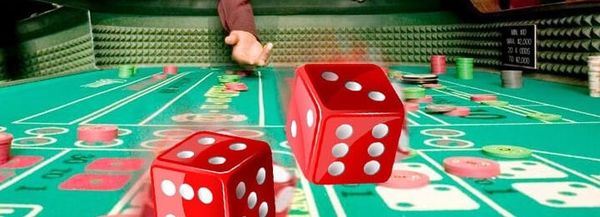
That’s craps in under a minute. It's fast-paced, full of energy and surprisingly simple once you get the hang of it. Read on and we'll have you rolling like a pro in no time!
Craps has one of the most fascinating histories in the world of casinos. It didn’t just appear in Vegas one day; it has been around for centuries.
Way back in the 12th century, knights played a dice game called Hazard during the Crusades. Yep, armour-clad men tossing dice. The game stuck around for centuries and even popped up in medieval literature. Hazard was complicated, but the core idea of betting on the roll of the dice set the stage for what would eventually become craps.
When Europeans crossed the Atlantic, they brought their games with them. By the 18th century, a simplified version of Hazard had made its way to New Orleans. From there, it took off, especially on Mississippi riverboats, where gamblers were always looking for fast-paced action. During the Civil War, soldiers passed the time with a stripped-down version that didn't even require a table — just dice and some space. That’s where “street craps” came from.
Craps as we know it really came together in the early 1900s, thanks to John H. Winn. He redesigned the game to include more betting options, most importantly allowing players to bet against the shooter. This completely changed the dynamic and gave rise to the 'right vs. wrong bettor' system. The new layout also helped to crack down on cheating, which was a major issue at the time.
When online casinos emerged in the late 1990s and early 2000s, craps was quick to follow. Initially, there were only basic software-based games, but over time, live-dealer craps tables started appearing — letting you play virtually while still getting that in-casino vibe. This made the game more accessible, particularly for those who initially found the in-person version a little intimidating.
Fast forward to today, and craps is still going strong. It may not receive as much attention as slots or poker, but it has a loyal following in both physical casinos and online platforms. With the growth of live-dealer games and mobile gaming, craps is experiencing something of a revival, especially among players who enjoy the social aspect of gambling and want a fast-paced game.
From medieval castles to digital casinos on your phone, craps has evolved with the times but never lost its soul. It's a classic with character: fast, loud, unpredictable and great fun.
At its core, craps is an exciting dice game in which players bet on the outcome of one or more rolls of two dice. It's a combination of chance and rhythm, and it's all about the atmosphere.
In a nutshell: You’re betting on whether the shooter will successfully roll a winning combination before rolling a 7.
Sounds simple, right? It is, once you cut through the noise of the table and lingo.
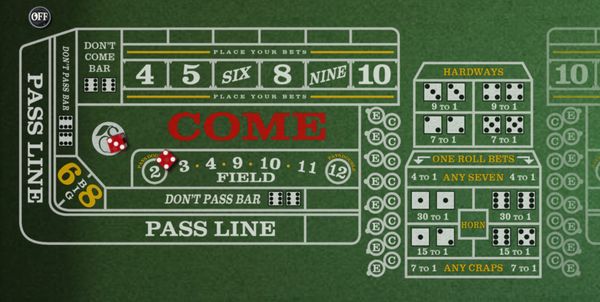
The craps table might look a little overwhelming at first, but once you know the basics, it’s easy to follow. Here’s what you’ll see:
If you’re new to the game, the jargon can seem like a foreign language. Here's a quick glossary to help you sound like a seasoned player:
And that’s craps at a glance. The table may seem overwhelming at first, but once you understand what’s going on, everything falls into place — and then it's just you, the dice, and the thrill of the roll.
Ready for the next phase? Let's take a look at the different bets you can place and which ones are worth your chips.
Craps offers a wide variety of betting options, some with great odds and others that are simply flashy. Below, we break down the main bet types, explain how they work and detail the payouts, so you can play smart (and maybe win big).
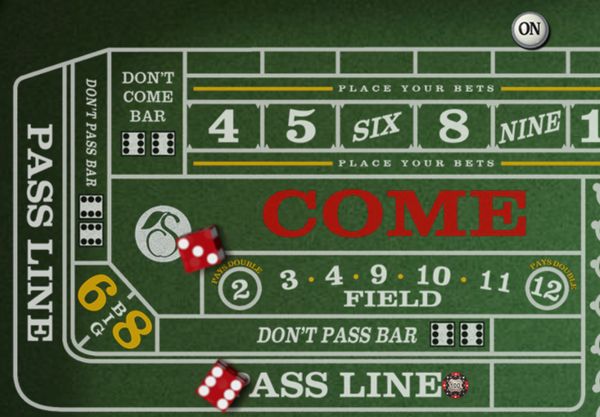
These are your go-to starting bets. Every game begins with one of these.
A smart choice for new players thanks to its simple mechanics and low house edge.
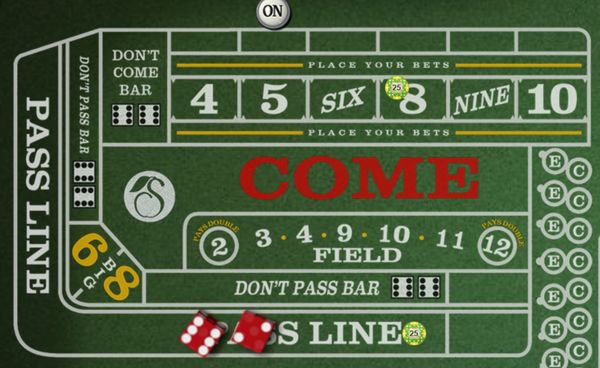
These work just like Pass and Don't Pass bets, but are placed after the come-out roll.
Great for maintaining momentum during a shooter roll.
This table outlines the probability of achieving each possible total when rolling two dice in the game of craps. It shows the number of combinations that produce each total and the number of ways in which each total can be rolled. The number 7 is the most common roll, appearing in six out of 36 combinations, which makes it central to the game's rules. The 'True odds vs. 7' column compares the likelihood of rolling each number with the likelihood of rolling a 7, and these odds are crucial for determining the payout and house edge on various bets in craps.
| Number | Combinations | Ways to roll | Probability | Odds vs 7 (True Odds) |
|---|---|---|---|---|
| 2 | 1-1 | 1 | 1/36 | -- |
| 3 | 1-2, 2-1 | 2 | 2/36 | -- |
| 4 | 1-3, 3-1, 2-2 | 3 | 3/36 | 6/3 = 2/1 = 2 to 1 |
| 5 | 1-4, 4-1, 2-3, 3-2 | 4 | 4/36 | 6/4 = 3/2 = 3 to 2 |
| 6 | 1-5, 5-1, 2-4, 4-2, 3-3 | 5 | 5/36 | 6/5 = 6 to 5 |
| 7 | 1-6, 6-1, 2-5, 5-2, 3-4, 4-3 | 6 | 6/36 | |
| 8 | 2-6, 6-2, 3-5, 5-3, 4-4 | 5 | 5/36 | 6/5 = 6 to 5 |
| 9 | 3-6, 6-3, 4-5, 5-4 | 4 | 4/36 | 6/4 = 3/2 = 3 to 2 |
| 10 | 4-6, 6-4, 5-5 | 3 | 3/36 | 6/3 = 2/1 = 2 to 1 |
| 11 | 5-6, 6-5 | 2 | 2/36 | |
| 12 | 6-6 | 1 | 1/36 |
Unlike most casino table games, craps actually offers bets that pay true odds (so called Odds bets). This means that there is no house edge.
Once a point has been established, you can place an Odds bet alongside your Pass/Come or Don’t Pass/Don’t Come bet. This will multiply your winnings based on the point value, and there is no house edge. You can think of Odds bet as a type of Place bet fixed to the point number, and with true odds.
| Point Number | True Odds (Pass/Come) | True Odds (Don’t Pass/Don’t Come) |
|---|---|---|
| 4 or 10 | 2:1 | 1:2 |
| 5 or 9 | 3:2 | 2:3 |
| 6 or 8 | 6:5 | 5:6 |
Only the base bet has a house edge. Odds bets are completely fair.
Casinos limit how much you can bet as odds. Common multiples are:
| Odds multiples | Max Odds bet allowed |
|---|---|
| 1× | Same as original bet |
| 2× | 2x original bet |
| 3-4-5× | 3x on 4 and 10, 4x on 5 and 9, 5x on 6 and 8 |
| 10×, 20×, 100× | Found at select casinos and online |
Suppose you place a pass line bet with 3x odds.
The more odds you take, the lower your effective house edge becomes.
Bet on a specific number (4, 5, 6, 8, 9 or 10) coming up (Place Win) or not (Place Lose) before a 7.
| Number | Payout | House Edge (Difference to True Odds) |
|---|---|---|
| 6 or 8 | 7:6 | 1.52% |
| 5 or 9 | 7:5 | 4.00% |
| 4 or 10 | 9:5 | 6.67% |
The best value is on the 6 and 8. Avoid the 4/10 unless you love risk!
Similar to Place bets, but with a 5% commission (called 'vig') for true odds.
The opposite of a 'Buy' bet — you're betting that a 7 will be rolled before the number.
Advanced move : It is often used by "wrong" bettors looking for safe odds plays.
These high-risk, high-reward bets are located in the centre of the table. Most are one-roll bets, meaning you will know whether you have won or lost immediately.
| Bet | Wins on | Payout | House edge |
|---|---|---|---|
| Any Craps | 2, 3, or 12 | 7:1 | 11.1% |
| Yo (11) | 11 | 15:1 | 11.1% |
| Ace Deuce (3) | 3 | 15:1 | 11.1% |
| Boxcars (12) | 12 | 30:1 | 13.9% |
| Snake Eyes (2) | 2 | 30:1 | 13.9% |
| C&E (Craps & Eleven) | 2, 3, 12, or 11 | Mixed | ~11.1% |
| Horn Bet | 2, 3, 11, or 12 | Mixed | 12–13.9% |
| Hardways | e.g., 2+2 = hard 4 | 7:1 or 9:1 | 9–11% |
| Fire Bet | 4+ different points hit | Up to 1000:1 | Varies (high) |
| All Tall / Small / All | Hit all high, low, or all point numbers | Up to 30:1 | High |
Use these for entertainment purposes only. They look impressive, but the odds are stacked against you.
| Bet type | When you bet | Wins on | Payout | House edge | Quick tip |
|---|---|---|---|---|---|
| Pass Line | Before come-out roll | 7 or 11 (then point repeats) | 1:1 | 1.41% | Best starting bet for new players |
| Don’t Pass | Before come-out roll | 2 or 3 (7 after point) | 1:1 | 1.36% | Lower edge, but you're betting against the table |
| Come | After come-out roll | 7 or 11 (then point repeats) | 1:1 | 1.41% | Like a second Pass Line bet, mid-round |
| Don’t Come | After come-out roll | 2 or 3 (7 before point) | 1:1 | 1.36% | Good defense during cold streaks |
| Odds (Back Bet) | After point is set | Point hits (true odds) | Varies (6:5, 3:2, 2:1) | 0.00% | Best value: Always take odds if allowed |
| Place Bets | Any time (on 4-10) | Chosen number hits before 7 | Varies (7:6–9:5) | 1.52–6.67% | Stick to 6 & 8 for best odds |
| Field Bet | One-roll only | 2, 3, 4, 9, 10, 11, 12 | 1:1 or 2–3:1 | 2.78%+ | Fun, but not great long-term |
| Proposition Bets | Center of table, anytime | Specific combos (e.g. Any 7) | 4:1 – 30:1+ | 10–17%+ | High risk, high reward—use sparingly |
| Safe | Meh | Risky |
|---|---|---|
| Pass Line | Place Bets on 5/9 | Field Bet |
| Don’t Pass | Come/Don’t Come | Proposition Bets |
| Odds Bets | Hardways / Any 7 |
When you're starting out, stick with the simple stuff — the golden combo is Pass Line + Odds. Once you're more comfortable, try mixing in Place or Come bets. But don't be tempted by the high payout odds in the centre. The house loves those bets for a reason.
While classic Craps, also known as “bank” Craps, is the version most folks are familiar with, there are actually a few variations of the game that pop up in different places. Each variation has its own rules, house edge and atmosphere, and knowing the difference can save you from a few surprises (or wasted bets).
Let's look at the most popular versions and what makes each one unique.
This is the go-to version. If you're learning craps, this is the one to start with.
It sounds appealing, but watch your bankroll. That higher house edge can catch you off guard.
More drama per roll. It's great for players who want higher-risk excitement without completely ruining their chances of winning.
Quick and to the point. It's ideal if you're not into layered strategies and just want to keep it simple.
If you're new to the game, stick with Bank Craps — it’s the fairest and most widely available option, and it gives you access to the best bets (like the Odds bets with a 0% house edge). The others are great for shaking things up or going for bigger wins, but always check the house edge first. Any apparent perks (like no early losses) usually come with a trade-off.
Pro tip: if you sit down and something seems 'off' from what you learned, ask if it's a variant. Dealers will usually tell you straight up.
Next up? Let's talk strategy: how to stretch your stack, ride hot streaks and avoid rookie mistakes.
 🇺🇸
🇺🇸Deposit $50+ and get 3 Spins on Bonuz Mania™ game to win extra prizes: Mega or Minor Jackpot, Piggyz Cash & Break up to $50,000, Deposit Multiplier up to 100x, or Cashback up to 50%! Every time you play Bonuz Mania Slot you will win at least one prize.
Every week in 2025, a mouth-watering $5,000 and 5,000 free spins prize pool is up for grabs, split between the top 150 players.
$10,000 is up for grabs every week! Simply play your favorite BitStarz table games and shoot up to the top of the real-time leaderboard. Each week a fresh new tournament launches and if you’re amongst the top 40 you will take home one of the prizes. What about wagering requirements? None. Zilch.
 🇺🇸
🇺🇸 🇺🇸
🇺🇸Okay, let's be realistic for a moment — craps is fun, fast and sometimes downright wild. But if you want to play for longer and maybe walk away with some chips, you need a plan. Whether you're betting with the shooter (the 'right side') or against them (the 'dark side'), these smart, low-edge strategies will help you play for longer and more consistently.
Right bettors are the ones cheering on the shooter, betting that they will hit their point and keep the table hot. It's the most common way to play and can also be the smartest if you stick to bets with the lowest house edge.
This is a go-to strategy for seasoned players who want action, coverage and smart risk management.
How it works:
Now you have three numbers working at once: your Pass Line point and two Come points. All of these are backed by odds bets that have zero house edge.
Why it works: You're staying active without going overboard, keeping the house edge low and giving yourself multiple chances to win with each roll of the dice.
This is perfect for when the table gets hot and you want to secure wins without taking too many risks.
How to play it:
Why it’s smart: you front-load for quick gains, then shift into a defensive stance to stop those chips disappearing on a sudden seven-out.
Yes, betting against the shooter is a legitimate strategy, and the maths actually favour you. If you don't mind missing out on the cheers and strange looks from other players, 'dark side' play can be one of the safest ways to grind out a win.
Here's how it works:
Why it’s effective: The 7 is the most likely number to be rolled, and you’re leveraging that statistic with low-house-edge plays (Don’t Pass = 1.36%, Don't Pass Odds = 0%).
If you don't want to see your Don't Pass bet wiped out on the first roll by an 11, you can hedge with a small Yo bet. For example, if you have $10 on Don't Pass, place $1 on Yo.
Some players also hedge by laying numbers they think are unlikely to be rolled, spreading risk even further.
Let's be honest: betting against the shooter isn't always popular. Craps is a team game, and 'wrong bettors' tend to be lone wolves.
Bottom line: Stay calm, and most players won't mind. You're playing smart, not rude.
Both styles can be highly effective, whether they are right or wrong. The key is to pick the one that matches your personality, risk tolerance and bankroll. You don't have to commit to one forever, either. Some players switch based on the vibe of the table or their own goals for the session.
| Category | Right Bettor | Wrong Bettor |
|---|---|---|
| Bet Type | Pass Line, Come, Place | Don’t Pass, Don’t Come, Lay |
| Backing the Shooter? | Yes | No |
| Best Starting Bet | Pass Line + Odds | Don’t Pass + Lay Odds |
| Core Strategy | 3-Point Molly / Regression | Flat + Lay / Hedge Play |
| House Edge (Base Bet) | 1.41% (Pass Line) | 1.36% (Don’t Pass) |
| Odds Bet Available? | Yes (Free Odds) | Yes (Lay Odds) |
| Social Reception | Positive, social | Neutral to cold |
| Volatility Level | Medium | Low to Medium |
| Risk Profile | Steady with streaks | Defensive, risk-aware |
| Ideal Player Type | Likes energy, team vibes | Prefers quiet, analytical play |
We've all heard it at the table:
Spoiler alert: they all fail eventually.
This doesn't mean that these strategies can't be fun or work for a session or two, but you need to understand the maths versus the myth. Here’s a breakdown of the most popular progressive and trending craps systems: what they actually do and how risky they really are.
You cover all numbers except 7 by placing:
This means you will win if the ball lands on 2, 3, 4, 5, 6, 8, 9, 10, 11 or 12. In other words, pretty much everything but 7.
Pro tip: If you’re using this system, set a tight stop-loss and quit while you're ahead by 1–2 units. It's a grind, not a goldmine.
Focus only on the numbers 6 and 8, which are two of the most frequent numbers after 7, and increase your bet every time one of them appears.
Example:
The goal is to turn one small bet into a streak-driven stack.
Pro tip: After two hits, consider reducing the original bet to only the profits. That's how you can stay in the game for longer.
After every loss, double your next bet to recover the previous loss and make a profit of one unit.
You will recover $30 and win $10.
Real talk: Martingale assumes you have infinite funds and no table limits. Neither of these are true.
Let’s set the record straight:
| Myth (Fallacy) | Reality (Math) |
|---|---|
| “It’s due!” | Dice have no memory. Odds reset each roll. |
| “Haven’t seen a 7 in a while” | Still 1 in 6 odds every roll. Always. |
| “If I keep doubling, I’ll win eventually.” | Maybe—but the bankroll hit is real. |
| “This system works every time.” | No system beats house edge long-term. |
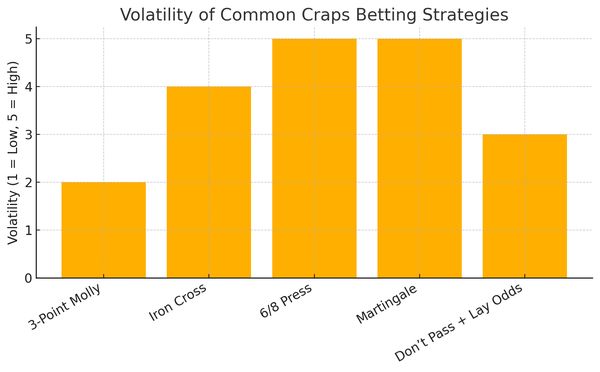
| Strategy | Volatility | Risk Level | Win Frequency | Payout Size |
|---|---|---|---|---|
| 3-Point Molly | Low–Med | Smart, stable | Medium | Medium |
| Iron Cross | Med–High | Fragile | High | Small |
| 6/8 Press | High | Aggressive | Medium | High |
| Martingale | Very High | Risky, dangerous | Low | Small (per win) |
| Don’t Pass Flat | Low | Conservative | Medium | Medium |
These systems can provide a sense of structure to your gameplay, but they are not a guaranteed way to win. No pattern or betting progression can change the odds of the dice. If you’re using one, treat it as a guide, not as the gospel truth, and stick to your bankroll rules.
Set limits. Take breaks. Stay sharp. Above all, play for fun.
You’ve mastered the basics and perhaps even developed your own strategy. But once you start digging deeper, you’ll hear a lot of talk about dice control and the differences between online and live play. Let's break both of these topics down with some straightforward information — no fluff, just facts and the things that actually matter.
Can you actually control the dice?
Short answer: maybe a little, but not enough to beat the house.
Also known as controlled shooting or rhythmic rolling, this is the idea that if you:
...you can influence the outcome enough to avoid rolling a 7 or to hit certain numbers more often.
Bottom line: Dice setting is fun and harmless — just don't bet the rent thinking it gives you an edge.
Casinos don’t love the idea, even if it’s mostly harmless.
Pro tip: Feel free to set your dice — just be quick and don't make a big show of it. Most players and staff won't mind as long as you're respectful.
Online craps has a completely different vibe, and understanding the differences (and similarities) can help you get the most out of it.
Helpful UI features:
Pro tip: Use auto-bet and roll history together to safely and quickly experiment with systems like 3-Point Molly or 6/8 Press.
This version is streamed in real time from an actual table with a real dealer and dice.
Etiquette tip: Don't spam the chat and don't ask the dealer for advice — they can't (and shouldn't) coach you.
It really depends on your mood and what you’re after:
| Style | Best for |
|---|---|
| Live Casino | Vibes, energy, high-fives, in-person action |
| RNG (Video) Craps | Fast play, strategy testing, convenience |
| Live Dealer Online | Hybrid feel with home comfort |
Whether you’re at the table or playing on your phone, craps is still craps: fast, unpredictable and totally addictive (in a good way). Just remember that it's always the same maths behind the magic.
Here’s your quick glossary of over 40 of the most common craps terms, words and phrases you’ll hear at the table. It's perfect for beginners and great as a refresher, and it's optimised for search.
These are the questions people ask Google or ChatGPT when they’re trying to figure out Craps.





































AI Tools Usage Statement
We use AI tools to support research and idea generation. However, all content is reviewed, fact-checked, and edited by humans to ensure accuracy and quality.
© 2026 | 1001Bonus.com