If you’ve ever found yourself at a casino table thinking, “I just want something quick, easy, and a bit silly,” then Casino War could well become your new favourite game. It’s not fancy. It’s not a strategic game of chess. It's literally just a card duel — the highest card wins. That’s it. And yet, people love it. Why? Because it taps into something primal. You’re not calculating probabilities or reading your opponent’s bluffs; you’re going to war! It's pure, unfiltered gambling adrenaline.
So, what is Casino War in a few words? It's a lightning-fast table game where you and the dealer each get one card, and whoever has the higher card wins — or goes to war if it's a tie.
Whether you're a casual gambler, a strategy nerd, or a gaming historian, this guide has something for you.
Curious about War but not quite ready to play for real money? Good call. Below you’ll find free demo versions from top game providers—no signup, no deposit, just a great way to get the feel of the wheel. Whether you're testing strategies or just getting comfortable with the layout, these demos are a stress-free way to learn the ropes.
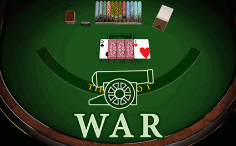
Let's take a trip down memory lane — do you remember the card game War that you probably played as a child? You'd split the pack with a friend or sibling, turn over cards one at a time, and whoever had the higher card would take both. If it was a tie? Boom! Time to go to war! You’d lay down three cards face down and flip the fourth. The winner takes all. Super simple. No strategy involved. But it got intense when you were down to your last few cards.
Fast forward to the early '90s: Shuffle Master (yes, the company that invented automatic shufflers) was looking for a way to promote its new machines. They thought: why not take a game that everyone knows how to play and turn it into a casino table game? In 1993, Casino War was born. It was officially launched in Nevada, complete with licensing, bow-tie-wearing dealers, and, of course, a house edge. It didn't become an overnight success, but it found a loyal following who enjoyed its straightforward, one-card drama.
From Vegas, Casino War slowly started appearing in other popular destinations — Atlantic City, Macau, cruise ships, and so on. Eventually, it made the leap online, first as a basic random number generator (RNG) game and then with live dealers, streamed from flashy studios with real cards and real-time action. Now you can go to war from your couch in your pyjamas. The dream!
Of course, once real money was involved, regulators had to step in. Casino War went through the usual certification processes — Gaming Laboratories International (GLI) tested and approved the game's fairness, individual states gave it the green light, and casinos started displaying the return-to-player (RTP) percentages prominently. Nowadays, you can play Casino War at any reputable venue, whether it's a traditional casino or an online platform, safe in the knowledge that it's fully legitimate and above board.
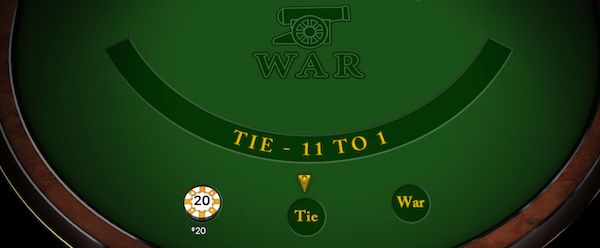
When you walk up to a Casino War table, it kind of resembles a blackjack table at first glance, with a semi-circular layout and spots for players with the dealer in the middle. But take a closer look and you’ll see the key differences. A six-deck shoe is used (that's 312 cards in total) and each player spot has two betting circles: one for your main wager and another for the optional tie bet if you're feeling lucky. You will probably also see a large, bold 'WAR' logo in the centre to let everyone know that this isn't your usual poker night.
Here’s the whole game boiled down: Your goal is to have a higher card than the dealer – aces are high, suits don't matter, and that's pretty much it. That’s the entire game. There are no combos, no five-card tricks and no suits to keep track of. The highest card wins. It's simple, fast and oddly satisfying.
All right, let's break down exactly how a round of Casino War works, step by step, so you know what to expect when you sit down (or log in).
First things first, place your chips in the main betting circle. This is your 'I'm in' bet. Nothing fancy here. There's no need to memorise charts or whisper secret prayers — just decide how much you want to wager, put it in the circle and you're ready to go.
Once everyone has placed their bets, the dealer burns one card (a classic casino move to get rid of the top card for fairness) and then deals one card face up to each player and one to themselves. It all happens pretty fast — boom, boom, flip — no suspenseful countdowns here.
Now, here’s what can happen:
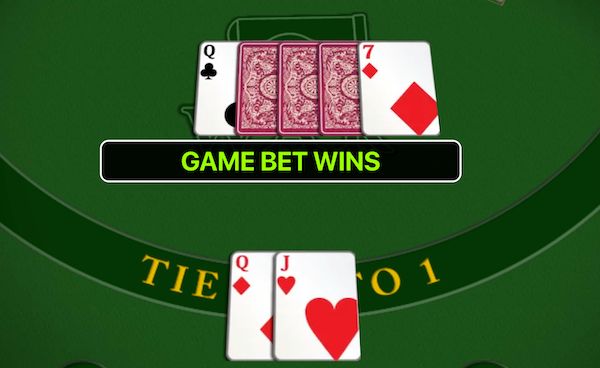
If you choose to go to war — and you should — you must match your original bet, which means you're doubling up. The dealer then burns three cards and deals everyone one more card. It's the same deal again: high card wins. If you win or tie this second showdown, you win even money on the raised bet and the original bet is returned. If the dealer wins? You lose both. Brutal, but hey — it's war!
Some tables also offer side bets to spice things up. The most common is the Tie Bet, where you bet that you and the dealer will draw the same rank straight away. If that happens, you can get paid big — usually 10:1. There are also some less common versions, such as Suit Match bets, where you win if your card matches the dealer’s in both rank and suit — but this depends on the casino or online platform you’re playing on.
Although Casino War is a simple game at heart, depending on where you play, the rules and payouts can differ just enough to keep you on your toes. Let's take a look at the different versions you'll find out there.
Once Casino War went digital, all constraints were removed. Online RNG (random number generator) versions sped things up considerably — you can play a dozen hands in just a few minutes. Live-dealer platforms, on the other hand, try to recreate the vibe of a physical table, but often throw in extras such as multi-hand modes, speed rounds and progressive jackpots that are won if you tie with specific cards or sequences. The fundamentals remain the same, but the additional features can be impressive.
Yep, Casino War has also made the jump to mobile and social apps. On platforms like Facebook or in mobile casino games, you'll find extremely casual versions, usually involving no real money, lots of coins and sound effects, and perhaps even cartoon dealers. Some let you level up, unlock new 'tables', or add jokey power-ups. It's not quite the same as being on the casino floor, but it's a good way to pass the time when you've got five minutes to spare and a phone to hand.
 🇺🇸
🇺🇸Deposit $50+ and get 3 Spins on Bonuz Mania™ game to win extra prizes: Mega or Minor Jackpot, Piggyz Cash & Break up to $50,000, Deposit Multiplier up to 100x, or Cashback up to 50%! Every time you play Bonuz Mania Slot you will win at least one prize.
Every week in 2025, a mouth-watering $5,000 and 5,000 free spins prize pool is up for grabs, split between the top 150 players.
$10,000 is up for grabs every week! Simply play your favorite BitStarz table games and shoot up to the top of the real-time leaderboard. Each week a fresh new tournament launches and if you’re amongst the top 40 you will take home one of the prizes. What about wagering requirements? None. Zilch.
Let's take a look at the numbers behind Casino War — not in a "maths class" kind of way, but just enough so you know what you're really up against when you put your chips on the table.
If you’re playing at a standard six-deck table, the odds are as follows:
So, technically, the dealer has a slight edge because they win more often than you do. There's nothing shocking about that — it is a casino game, after all.
At first glance, it seems as though you and the dealer each have a 50/50 chance of winning a one-card showdown. After all, you're both drawing from the same deck. But...
The difference comes from what happens when there's a tie, which happens about 2.9% of the time with six decks.
Now here's the catch:
So, although tie outcomes are relatively rare, they tip the odds ever so slightly in the house’s favour.
You lose more often, not because the dealer is dealt better cards, but because the tie rule favours the house, no matter which option you pick.
Now, let's talk about the house edge — essentially, how much the game is expected to take from you over time.
Certain rule changes can alter the game’s return-to-player (RTP) — sometimes slightly, sometimes significantly:
So, as you can see, tiny details at the table actually matter. It pays to look before you leap.
Okay, so you’ve sat down at a Casino War table. What’s the best way to play this card-flipping game? Believe it or not, there is a strategy here... it's just refreshingly simple.
Here it is — the one golden rule:
Always go to war.
Seriously, that’s the whole strategy. If you tie with the dealer, never surrender. Mathematically, going to war gives you a slightly better return — around a 0.5% improvement in the house edge. It won't turn the odds in your favour — this isn't blackjack — but it matters over time.
Surrendering might feel like the safe option, but it's like folding with a decent hand — you're giving up when the numbers say you shouldn't.
Casino War is one of those deceptively relaxed games that can still reduce your bankroll significantly if you’re not careful. Because it’s so fast, you can get through 50–60 hands in a short session.
So here’s the deal:
War is fun... until it isn't.
Ah, the Tie bet — it looks so tempting, especially with that juicy 10:1 payout. But let's be honest: it's a bankroll killer in disguise. The house edge can be as high as 18%. That’s massive.
Unless you’re chasing free stuff (some players toss in Tie bets just to rack up rewards faster), it’s best to treat this one like dessert: fun once in a while, but not something to base your whole diet on.
You’ve probably heard of systems such as the Martingale method, which involves doubling your bet after a loss, or the Paroli method, which involves doubling your bet after a win. Can you use them in Casino War? Yes, but will they help in the long run? Not really.
The reality is that:
Think of these systems as tools for entertainment, not actual strategies. They're more about pacing your play than shifting the odds.
Okay, for the card counters and edge seekers out there — can Casino War be beaten? In theory, maybe. But in practice? No.
You'd need:
But casinos know this. War tables usually shuffle often, especially in online casinos or when they are busy. So, even if there is a tiny advantage to be gained, it is usually offset by the logistics.
In short, this isn’t the game for card sharks. Just embrace the chaos and enjoy the ride.
Casino War isn’t just about the cards — it's also about the atmosphere. Whether you're playing in person or online, the game has a rhythm, a social flow and a few unspoken rules that help to ensure everyone has fun.
One thing you’ll notice right away is that: Casino War moves fast. There's no hesitation, no decisions about splitting or doubling down — you place your bet, receive your card, and — boom! — you know the outcome.
This makes it easy to chat with fellow players or the dealer — it's a fairly low-pressure social game. You’ll often see groups of friends playing together, joking around, cheering on ties (ironically) and getting overly enthusiastic for a game that’s essentially one-card poker. But hey, that’s part of the charm.
Just keep in mind
Tipping the dealer — known as 'toking' in table game lingo — is always appreciated. It's not required, but if you're enjoying yourself, winning a bit or just getting on well with a good dealer, giving them a chip every so often will be very much appreciated.
Most players either:
Playing Casino War online? The experience is still fast, but it comes with a few techy extras:
Look, Casino War is fun — it’s fast and flashy, and it's easy to get hooked on the “just one more hand” vibe. But because it’s so quick and simple, it’s also really easy to lose track of time — and money. So, before you dive in, it's worth talking about how to keep things healthy.
This game moves fast. Like, lightning-fast. You can go from thinking 'this is fun!' to wondering where your chips have gone in a matter of minutes. That’s variance — the natural ups and downs that come with games of chance. With War, this is especially noticeable because every round feels the same and there is no real decision-making after the bet is placed. So, if you hit a rough patch, it can quickly snowball.
The key is to know that short-term losses are part of the game, and they can add up quickly if you don't pace yourself.
The smartest move? Set limits before you start.
And if you do walk away ahead? Amazing! Set some of those winnings aside and resist the urge to put it all back on the table.
There's no shame or judgement here, just smart play.Casino War FAQ: Your top questions answered!
Is Casino War beatable?
What happens if I don’t go to war on a tie?
Can I count cards in Casino War?
Do the odds in Casino War beat those in Baccarat or Blackjack?
How much does the Tie bet pay in Casino War?
What’s the best strategy for playing Casino War?
How many decks of cards are used in Casino War?
Is there a live dealer version of Casino War?
Can you play Casino War for free?
Casino War is one of those rare games that is both completely ridiculous and strangely thrilling. It’s fast and easy to learn, delivering a little jolt of adrenaline with every hand. There are no complicated decisions or deep strategy — just pure, head-to-head luck.
However, it's important to remember that the house always has the edge and that, over time, the expected loss adds up — especially if you start chasing tie bets or betting big without a plan. So if you’re playing, do it for the excitement, not the expectation.





































AI Tools Usage Statement
We use AI tools to support research and idea generation. However, all content is reviewed, fact-checked, and edited by humans to ensure accuracy and quality.
© 2026 | 1001Bonus.com


